
Just two years ago, the debate around online visibility usually came down to one question: “Are you ranking on Google?”
Today, that question is no longer enough.
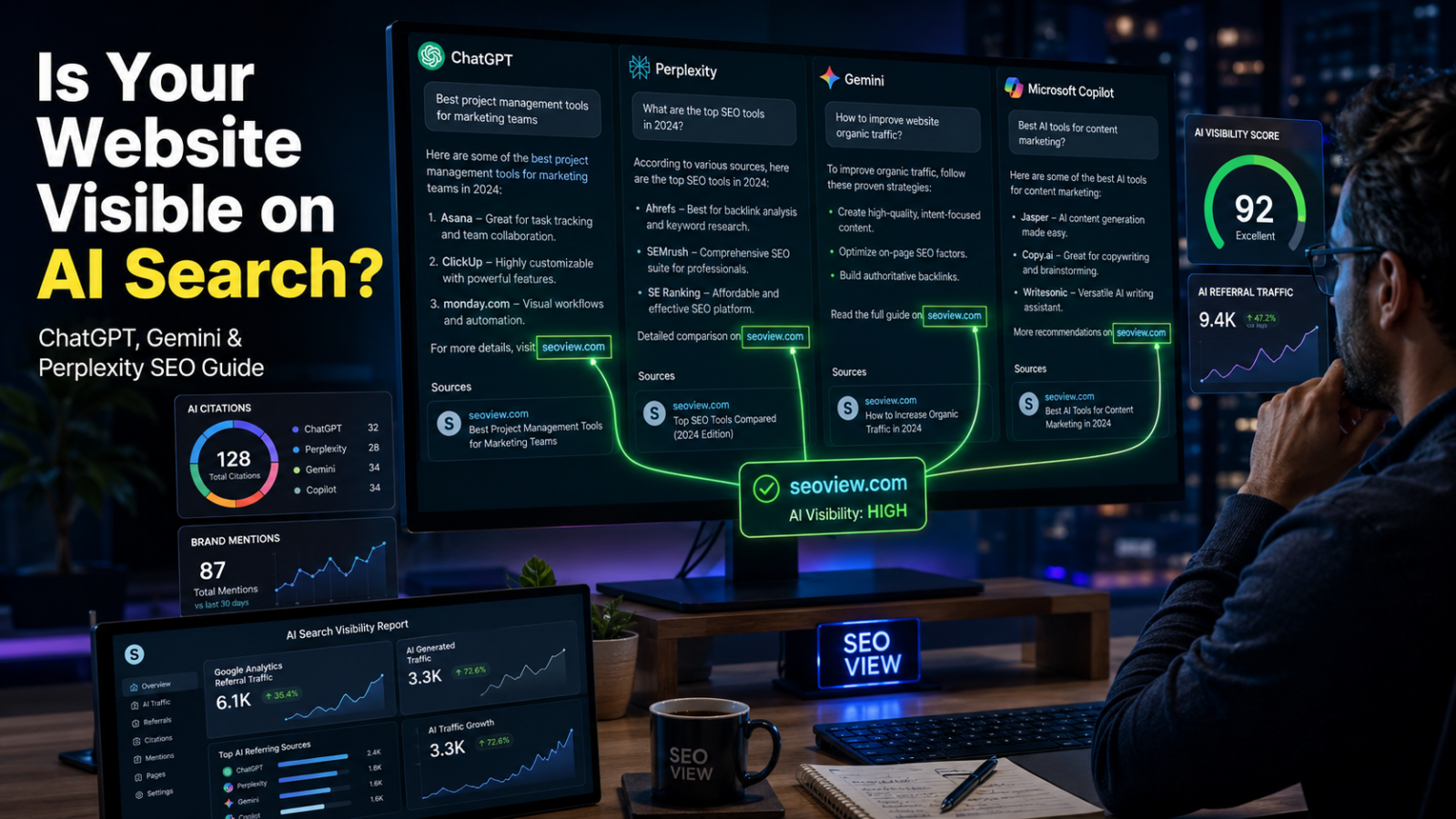
A growing number of users now ask platforms like OpenAI’s ChatGPT, Perplexity AI, Google’s Gemini, or Microsoft Copilot directly instead of using traditional search engines. These AI systems generate their own responses, cite selected websites, and sometimes recommend specific brands before a user even opens Google.
The challenge is simple: most website owners still have no idea whether their site is appearing in those AI-generated answers.
And in digital marketing, what isn’t measured usually can’t be improved.
Why Does It Matter to Appear in AI Search Engines?
Before looking at the verification methods, it’s important to understand why visibility in AI-driven platforms is becoming increasingly valuable.
Large language models like ChatGPT or Perplexity work differently from traditional search engines. Instead of showing ten blue links for users to choose from, they often generate a direct answer and cite only a handful of sources.
If your website isn’t among those selected sources, you may become effectively invisible in that conversation, even if you rank highly on Google for the same topic.
What many SEO professionals are now noticing is that referral traffic from conversational AI platforms is still relatively small in absolute numbers, but it’s growing steadily month after month. In industries such as:
- Technology
- Marketing
- Finance
- Healthcare
- SaaS
that traffic is already measurable and increasingly valuable.
Ignoring this trend today feels very similar to ignoring SEO in the early 2010s.
How to Check if Your Website Appears on ChatGPT
OpenAI ChatGPT is currently the most widely used conversational AI assistant globally. Fortunately, checking your visibility inside ChatGPT is fairly straightforward.
The Simplest Method: Ask Relevant Questions
Open ChatGPT and search the way a real user would.
For example:
- “What are the best SEO agencies in USA?”
- “What resources are best for learning SEO?”
- “Which SEO company is recommended for small businesses?”
Then carefully review the responses.
Look for:
- Your brand name
- Your domain
- Mentions of your articles
- Citations or links to your content
If you use the version of ChatGPT with web browsing enabled, results may vary because the system combines trained knowledge with live web results.
One important detail many people overlook: ChatGPT does not always display direct citations. Sometimes your brand may appear in the response without a clickable source link.
That’s why it’s worth checking both:
- explicit links
- plain brand mentions inside the text
Try Different Question Variations
A common mistake is testing only one query and assuming the results are definitive.
Language models are highly sensitive to wording. A small change in phrasing can produce completely different cited sources.
Instead of testing once, try:
- informational questions
- comparison-based searches
- local intent searches
- “best tools” style queries
- beginner-focused questions
Testing multiple variations gives a much clearer picture of your actual visibility.
How to Check if Your Website Appears in Perplexity
Perplexity AI Perplexity behaves more like a traditional search engine because it clearly displays the sources used to generate each answer.
That makes visibility checks much easier.
Simply ask questions related to:
- your industry
- your expertise
- your services
- your competitors
Perplexity typically shows:
- linked source domains
- article titles
- reference websites
This allows you to immediately see whether your content is being selected.
What Type of Content Does Perplexity Prefer?
After analyzing multiple industries, one pattern appears consistently:
Perplexity tends to favor content that is:
- clearly structured
- easy to scan
- direct in answering questions
- authoritative
- well-organized with headings
Pages with long introductions, weak formatting, or vague answers tend to appear less often.
In practice, concise expertise usually performs better than overly bloated content.
How to Check Visibility in Gemini and Copilot
Google Gemini
Google Gemini has a closer relationship with Google Search because it operates within Google’s ecosystem.
Websites with strong organic SEO visibility often have a better chance of being referenced by Gemini, although this is not guaranteed.
To test visibility:
- Open Gemini
- Ask industry-related questions
- Check cited sources and referenced domains
Interestingly, Gemini and Google AI Overviews do not always cite the same websites, even though both belong to Google.
Microsoft Copilot
Microsoft Copilot is especially relevant for corporate and productivity-related searches because of its integration with Microsoft 365 products.
The checking process remains similar:
- ask targeted questions
- review the cited sources
- monitor brand mentions
For B2B websites, Copilot visibility may become increasingly important over time.
Tools to Monitor Your Presence in AI Platforms
Manual checks are useful, but they aren’t ideal for long-term tracking.
Several specialized monitoring tools are now emerging specifically for AI visibility analysis.
AI Visibility Tracking Tools
Popular platforms include:
- Profound
- Otterly.ai
- Peec AI
These tools are designed to track:
- brand mentions
- domain citations
- recurring AI-generated references
They’re still evolving, but many SEO professionals already see them as the next generation of visibility monitoring tools.
Use Google Analytics for Referral Tracking
You can also identify AI-generated traffic directly in your analytics platform.
Check referral traffic from sources such as:
- chat.openai.com
- perplexity.ai
- gemini.google.com
What many site owners are discovering is that visitors from AI recommendations often show:
- longer session duration
- lower bounce rates
- higher engagement
- stronger conversion intent
That makes this traffic particularly valuable, even when overall volume is still modest.
Why Some Websites Rarely Appear in AI Results
If your site rarely appears in AI-generated answers, several common issues are usually involved.
Weak Content Structure
AI systems prefer pages that:
- answer questions directly
- use clear headings
- organize information logically
- avoid unnecessary filler
Content buried beneath long introductions is less likely to be selected.
Low Domain Authority
Although AI systems don’t evaluate websites exactly like Google does, authority still matters.
Established domains with:
- quality backlinks
- topical expertise
- consistent publishing history
generally have a stronger chance of being referenced.
Lack of Original Insights
One of the clearest trends emerging across AI-generated citations is the preference for:
- original research
- unique insights
- expert analysis
- case studies
- firsthand experience
Content that simply rewrites existing information often struggles to stand out.
Technical SEO Problems
Technical SEO still matters.
If your site suffers from:
- indexing problems
- crawl issues
- broken pages
- poor accessibility
AI systems may struggle to access or trust your content properly.
Strong technical foundations remain essential for visibility everywhere, including conversational AI platforms.
Frequently Asked Questions
How do I know if my website appears in ChatGPT responses?
The easiest method is to ask ChatGPT questions related to your industry, services, or brand and check whether your website, brand, or content is mentioned in the answers.
Is there a tool to monitor AI search visibility?
Yes. Platforms like Profound, Otterly.ai, and Peec AI specialize in tracking mentions across AI-driven systems such as ChatGPT, Gemini, and Perplexity.
Does ranking on Google guarantee visibility in ChatGPT?
No. Strong Google rankings can help, but AI systems also evaluate structure, clarity, authority, and originality when selecting sources.
Is traffic from AI platforms actually valuable?
Yes. Although still relatively small for many websites, AI referral traffic often shows strong engagement and conversion quality.
Can SEO agencies help improve AI visibility?
Yes. Many agencies are now expanding into areas sometimes called:
- AI SEO
- GEO (Generative Engine Optimization)
- LLMO (Large Language Model Optimization)
These strategies focus on improving how websites are understood and cited by AI systems.